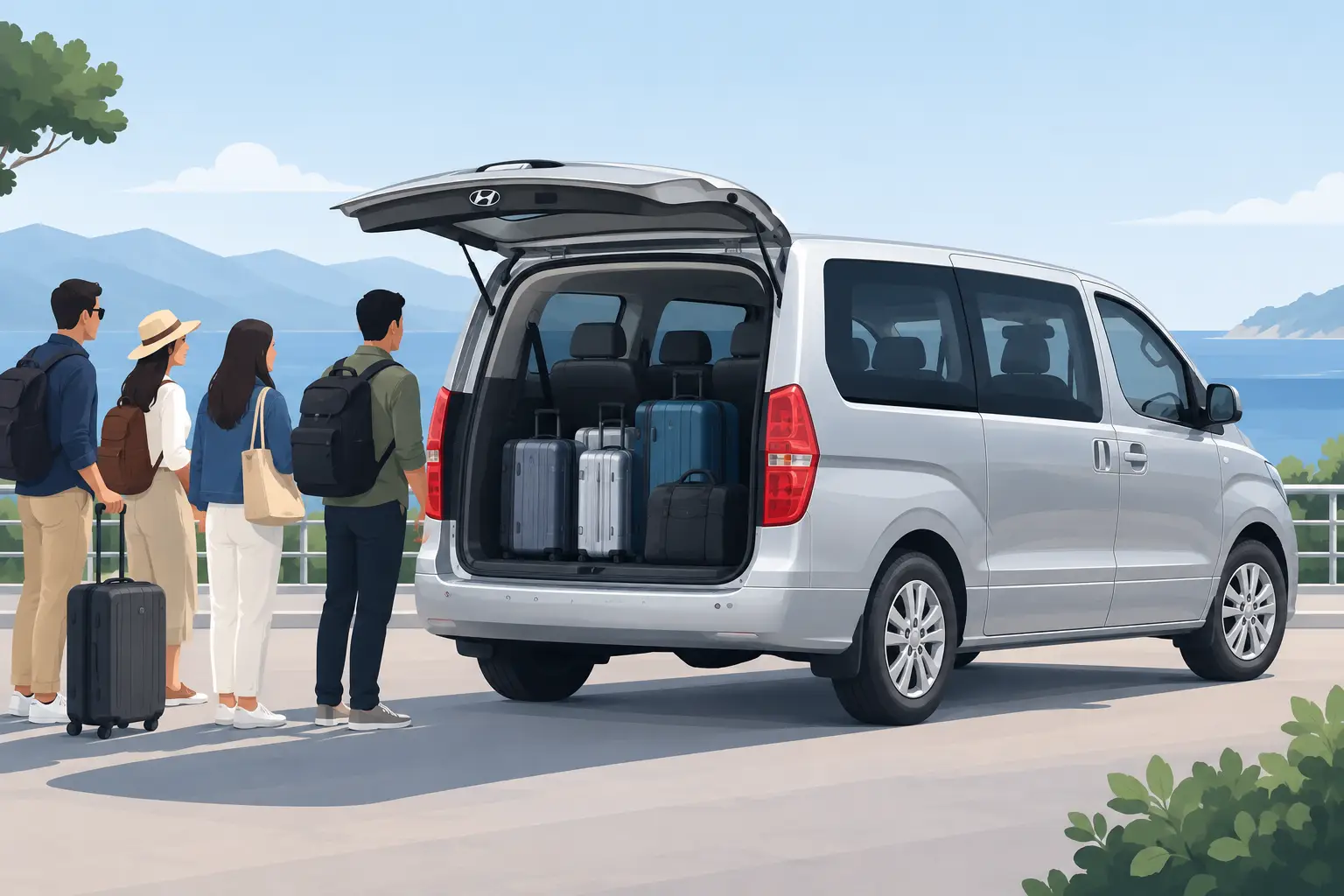
A minibus can make group travel far simpler, but only when there is enough room for both people and bags. Minibus luggage capacity is not a single fixed number: it changes with the vehicle layout, passenger count, type of luggage and whether anyone is carrying bulky items such as pushchairs, golf clubs or musical equipment.
For an airport journey, getting this right matters as much as choosing the collection time. Nobody wants suitcases on laps, a cramped final row or the worry of leaving something behind because the vehicle looked bigger in a photo than it is in real life. A little planning before you book gives everyone a more comfortable start and finish to the journey.
What affects minibus luggage capacity?
The number of seats tells only part of the story. A vehicle advertised for 16 passengers may be ideal for a local event where most people carry a handbag or small backpack. It may not be the right choice for 16 adults travelling to the airport with large hold cases, cabin bags and duty-free space needed for the return.
The most important factor is the balance between passengers and luggage. Each occupied seat reduces the usable area inside the vehicle, while the rear luggage section varies between makes and models. Some minibuses have a deep boot behind the final row; others prioritise seating and have limited room once every seat is in use.
Luggage shape matters too. Four soft weekend bags can fit where two hard-shell cases cannot. Large suitcases, ski bags, folding wheelchairs, prams and equipment cases all need to be mentioned at the time of booking. This is not being difficult or over-cautious. It allows the right vehicle to be assigned from the outset.
A practical guide to minibus luggage capacity
For most airport transfers, think about luggage in categories rather than trying to estimate by weight. Tell your transfer provider how many passengers are travelling, then separate bags into large suitcases, medium cases, cabin cases and personal bags. Mention anything that will not stack neatly.
As a broad guide, a fully occupied minibus is usually best suited to light luggage. Where every traveller has a standard checked suitcase, it is often sensible to reduce the passenger count or arrange a larger vehicle configuration. A group of eight with eight large cases may need more luggage space than a group of twelve heading to a wedding with only small bags.
The following details make it much easier to plan correctly:
- the total number of adults, children and infants travelling
- the number of large, medium and cabin-sized cases
- pushchairs, car seats, wheelchairs or mobility aids
- oversized items such as golf clubs, sports kit or instruments
- whether the same luggage will be carried on the outward and return journeys
A clear description is more useful than saying “a few bags”. For example, “six adults with six large cases, four cabin bags and a folding pushchair” gives the booking team what they need to make a sound recommendation.
Airport luggage is usually the deciding factor
Airport groups commonly underestimate how much they are carrying. A family holiday may involve a case per person, hand luggage, a pram, children’s backpacks and travel cots. Business groups can be lighter, but may still have presentation materials, garment bags or equipment that cannot be squeezed around passengers.
The return journey deserves equal attention. People often travel out with organised cases but return with extra purchases, gifts or items picked up during the trip. If your bags are likely to increase, say so before departure. It is far easier to plan for extra space than to solve a packing problem at the kerbside after a late-night flight.
Consider comfort, not just whether bags fit
A minibus should feel like group transport, not a puzzle. Even if every case can technically be loaded, packing too tightly can make the journey less pleasant and slow down drop-offs. Passengers may need access to medication, baby supplies, coats or travel documents, while the driver needs clear visibility and a safe, secure load.
For longer transfers from Liverpool to Manchester Airport, Heathrow, Birmingham Airport or a cruise terminal, a little extra capacity is often worth it. It gives the group room to settle in and means cases can be stored properly rather than moved around at every stop.
When should you book a larger vehicle?
If you are close to the expected limit, choose space over guesswork. A larger minibus, two vehicles or a people carrier alongside the main vehicle can be the better option, depending on the group. The right answer depends on the number of bags, the route and whether everyone needs to travel together.
Book more capacity when your party includes several large cases per household, a pushchair and children’s equipment, mobility equipment, or bulky items for a wedding, sporting event or cruise. Groups travelling from multiple addresses should also allow a little extra time and room, as bags can quickly build up at each collection point.
There is a trade-off. A larger vehicle may cost more than the smallest option that could just about work. But an upfront decision prevents last-minute changes, delays and uncomfortable journeys. With a fixed quote agreed before travel, you know where you stand rather than facing unexpected arrangements on the day.
How to help your driver load safely
Good loading is about safety as well as capacity. Heavy cases should be placed low down and secured where possible, with lighter bags on top. Loose luggage should not be left in aisles, by emergency exits or where it could move under braking.
You can help by having bags ready at collection and keeping passports, mobile phones, medication and valuables with you rather than in the main luggage area. If someone needs a particular bag at the airport, let the driver know so it can be loaded last and unloaded first.
For airport arrivals, keep the group together while luggage is being collected and confirm if a case is missing or delayed. Your vehicle can only be loaded once the actual bags are present, and clear communication helps the onward journey run smoothly.
Questions to ask before booking a minibus
You do not need to know the exact litre capacity of a vehicle to make a good booking. Ask whether the proposed minibus is suitable for your exact passenger and luggage numbers, not simply whether it has enough seats. A professional transfer provider should be happy to discuss the details and advise honestly if more room is needed.
It is also worth confirming child seat requirements, accessibility needs, collection addresses and flight details. For an arrival, flight monitoring and a meet-and-greet service can remove pressure when your plane is delayed or luggage takes longer than expected. For a departure, build in enough time for collections, loading and the airport journey itself.
Is a trailer the answer?
A trailer can provide useful extra luggage room for some larger groups, but it is not always necessary or appropriate. It can affect vehicle access, loading arrangements and journey planning. The key point is to raise the question early rather than assuming one will be available.
Your provider can then decide whether a trailer, a larger vehicle or an additional vehicle is the safest and most practical solution for your journey.
Make the booking around your real luggage
The best minibus booking is based on what your group is actually taking, not the minimum space you hope to get away with. Share the full picture, including unusual items and likely return luggage, and you can travel door to door with confidence.
Modernist Transfers is here for Liverpool families, business travellers and groups who want a clear, pre-booked plan. Tell us who is travelling and what needs to come with you, and we will help arrange transport that gives your group the room it needs from the first collection to the final drop-off.